
Introduction
Developing a video content system is most useful when it is connected to a specific business job. For marketing teams that want more mileage from production, that job is to turn one strategic video into a repeatable set of useful assets. Gisteo often helps clients think beyond a single deliverable by planning how an explainer can support the website, sales outreach, social media, and customer education.
Gisteo’s approach is rooted in clarity: find the core idea, shape it into a concise story, and produce a video that can support real marketing, sales, onboarding, or internal communication goals. Relevant starting points include explainer video production, animated video work, and the Gisteo portfolio.
Think Like a Library, Not a File
Most video projects begin with a surface-level request: make it shorter, make it more engaging, make it look modern. Those are reasonable goals, but they are not enough. The stronger question is what the viewer needs to understand, believe, or do after watching.
That question changes the whole structure. A video for a skeptical buyer needs proof. A video for a new customer needs orientation. A video for a buying committee needs a shareable summary. A video for employees needs context and a next step.
Start With the Core Explainer
The best format depends on the job. Some situations call for a concise animated explainer. Others need a product walkthrough, a testimonial, a short social cutdown, a training module, or a simple motion graphic that makes one idea easier to absorb.
- Use a core explainer when the audience needs the big picture.
- Use short clips when the same idea needs to travel across email, social, or sales follow-up.
- Use proof-driven assets when trust is the main obstacle.
- Use educational videos when adoption, onboarding, or support volume is the concern.
Plan Derivative Assets Before Production
A strong video message usually has a simple spine: name the situation, clarify the problem, show the better path, explain why your solution makes sense, and end with a next step. The wording, pace, and visuals should all serve that spine.
This is where Gisteo’s scripting process matters. A polished video can still fail if it is built on a fuzzy message. Gisteo helps turn raw notes, product details, and stakeholder input into a story viewers can follow.
How Gisteo Builds More Value Into the Project
A Gisteo project can include strategy, scripting, storyboarding, animation, motion graphics, editing, voiceover direction, and versions for different channels. That makes it easier to create a video that feels useful beyond the first upload.
Depending on the goal, the same project can support social media video assets, sales follow-up, landing pages, onboarding, or internal presentations. Teams that want budget clarity can also review explainer video pricing before starting a conversation.
How to Keep the System Fresh
Measurement should match the video’s job. A landing page video might be judged by conversion rate, scroll depth, or demo requests. A sales video might be judged by reply rates, meeting quality, or deal velocity. An onboarding video might be judged by support tickets, activation, or feature adoption.
| Goal | Useful signals |
| Awareness | Reach, watch time, qualified visits |
| Conversion | CTA clicks, form fills, booked calls |
| Sales support | Email engagement, stakeholder shares, deal progress |
| Education | Completion, fewer repeated questions, faster adoption |
Repurposing Before Production
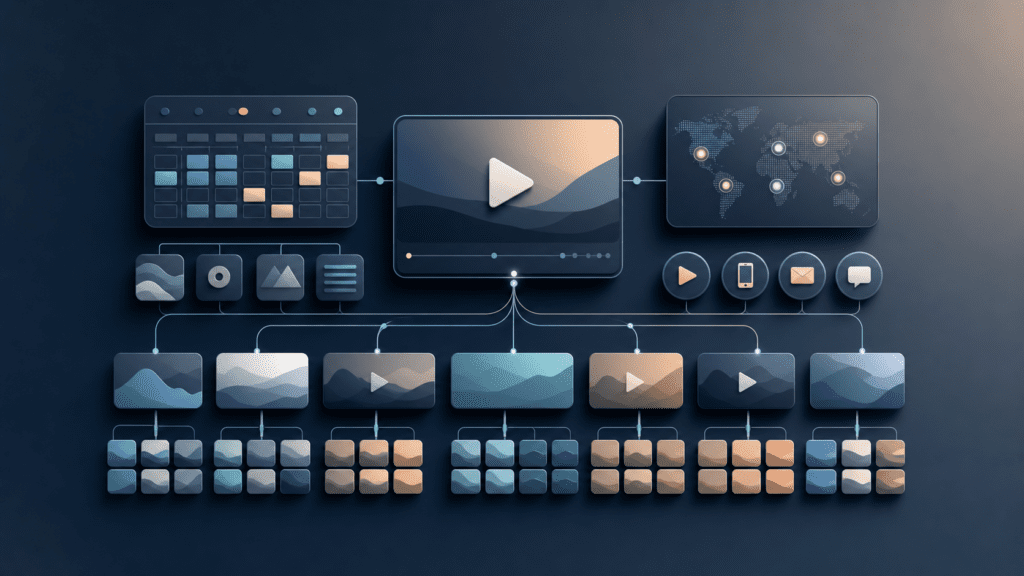
A video content system starts before animation begins. Decide which scenes, lines, and visuals might become short clips, stills, GIFs, email assets, or sales snippets.
This planning helps Gisteo design assets with reuse in mind. A small amount of foresight can produce a much more useful library after the main video is complete.
Production Questions for video content system
Before producing a video around video content system, the team should make a few decisions that are easy to skip but expensive to fix later. The clearer these answers are upfront, the easier it is for Gisteo or any creative partner to make the video feel specific instead of interchangeable.
- Who exactly is the viewer, and what do they already know?
- What single idea should the viewer remember after the video ends?
- Where will the video appear first: website, email, paid media, sales follow-up, onboarding, or internal rollout?
- What proof points, examples, screenshots, customer language, or brand details need to be included?
- What next step should feel natural after watching?
These questions also protect Yoast and search performance indirectly. A focused article and a focused video are both easier to optimize because the keyword, headline, structure, and user intent point in the same direction.
Distribution Ideas for marketing teams that want more mileage from production
Distribution should be planned before final delivery. A homepage viewer, a LinkedIn scroller, a sales prospect, and a new customer do not need the same version of the same idea. When the production plan accounts for those differences, the final video can create more value across the business.
For many Gisteo projects, that means producing one primary video plus a handful of supporting assets: shorter social edits, silent autoplay versions, sales-friendly links, thumbnail options, and cutdowns that can be used in email or paid campaigns. This keeps the message consistent while giving each channel a version that fits.
It also gives the article itself more internal-link value. Readers who arrive through search can move from the topic to examples, process details, pricing context, and contact options without feeling forced into a hard sell too early.
Gisteo Resources to Connect
This article can naturally connect readers to explainer videos, social media videos, Gisteo portfolio, and explainer video pricing, free consultation, explainer videos by funnel stage. Those internal links help readers move from advice to examples, pricing context, and a conversation with Gisteo.
The practical takeaway is that video content system should not live alone. It should connect to the buyer journey, the website, the sales process, and the larger body of video work that helps the brand explain itself consistently.
Conclusion
A video content system should not feel like a generic content assignment. It should solve a specific communication problem with a format, structure, and call to action that fit the audience.
Gisteo can help you choose the right approach, shape the message, and produce a video that works across the places your audience actually sees it. To explore options, visit the Gisteo portfolio or request a free consultation.