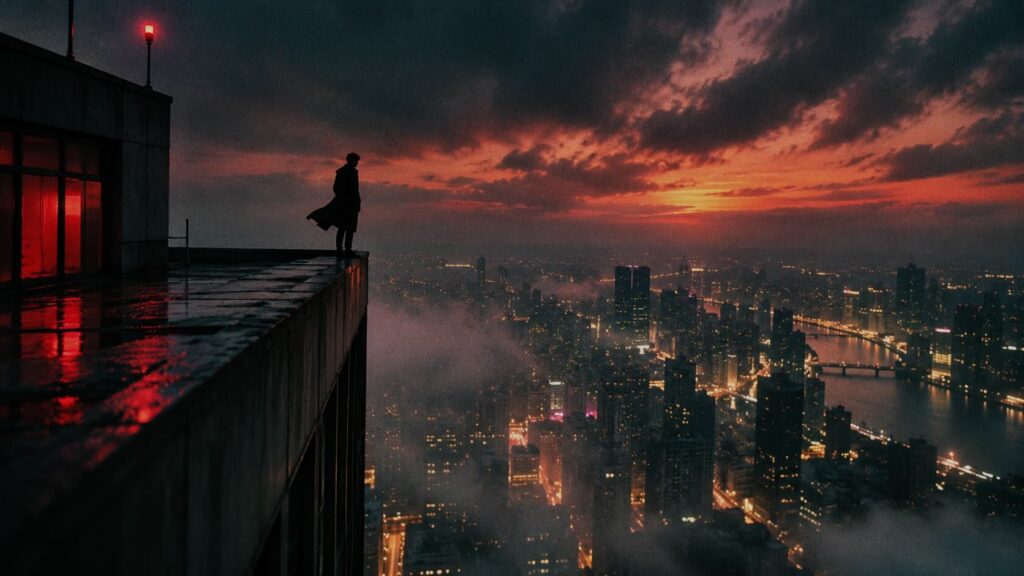
 By Stephen Conley, Founder & Creative Director at Gisteo
Quick answerAn AI trailer is a short preview video, usually 30 seconds to 2 minutes, where the footage is generated with AI instead of filmed. People use them to pitch films and series, sell books and online courses, launch products and promote events. You can make a rough one yourself with AI video tools in an afternoon, but a trailer that carries a brand or a release date usually needs a writer, an editor and consistent characters from shot to shot, which is where an AI production studio comes in. At Gisteo, a cinematic AI trailer up to 60 seconds costs $3,000 and takes two to three weeks.
Introduction
Search YouTube for “AI trailer” and most of what comes back is fan-made: imagined sequels, recast classics and movies that don’t exist. Those videos showed how quickly AI can produce trailer-style footage. They also gave the format a reputation problem, and in 2025 YouTube cut off ad revenue for several channels known for fake movie trailers.
The trailers we make at Gisteo are the other kind: original previews for clients’ own books, courses and businesses, written and edited by people. This guide covers the main types of AI trailers, a few parody trailers we made for fun, how one gets made, what the tools can and can’t do, the rules to stay inside, and what a professional one costs.
Types of AI trailers
| Type | What it sells | Typical length | Where it runs |
|---|---|---|---|
| Film or series pitch trailer | A story that hasn’t been made yet, to producers, studios or investors | 1 to 2 minutes | Pitch meetings, festival submissions, crowdfunding pages |
| Book trailer | A novel or nonfiction book, before or after launch | 45 to 90 seconds | Amazon author pages, social, the author’s site |
| Course trailer | An online course or coaching program | 1 to 2 minutes | Sales pages, course platforms, YouTube |
| Product or launch trailer | A product, app or feature release with a date attached | 30 to 60 seconds | Launch pages, social ads, email |
| Event trailer | A conference, tour or live show | 30 to 60 seconds | Event sites, ticketing pages, social |
A trailer differs from a commercial in one main way: it sells something that’s coming, or something people experience over time, so it leans on suspense and promise more than on features and price. If you’re weighing a trailer against a sizzle reel, the short version is that a sizzle reel shows what you’ve already done, and a trailer sells what’s next.
AI trailer examples from our work
The Art of Investment Misery: a book trailer
A 69-second cinematic trailer for a book about investing. A short trailer like this gives an author something to run on the book’s page, in ads and on social from launch day.
Parenting Your Extreme Teen: a book trailer and a course trailer
For family therapist Scott Sells, we made a 100-second trailer for the book and a separate, longer trailer for the online course built on it. Same story world, two jobs: one sells the book, the other sells enrollment.
The same project grew into a full series of AI chapter videos, which we cover in how to turn a book or course into video lessons. All of our trailers, including a 75-second course trailer for the PTR program, are in the trailers section of our AI video examples.
Our own experimental trailers
Between client projects, we make trailers for things that don’t exist. Nobody is paying for them, so we can try new video models, pacing and jokes without a brief to protect. The techniques carry over, though. Documentary framing, reality-show title cards and a streaming-service look all turn up later in client work. All three below are Gisteo originals, with no borrowed characters and no real people’s faces.
Slopflix
Slopflix is a 55-second trailer for a streaming service whose whole catalog is AI slop: the glossy, interchangeable, slightly-off content people mean when they roll their eyes at AI video. It borrows the look of a streaming launch, red wordmark and all, and sells the slop with a straight face.
We made it for the AI video haters, and a lot of their criticism is fair. Most AI video is bad because it skips the parts that make any video good: a script, a point of view and an edit. Slopflix makes that argument in the format it’s mocking. It’s also a test of taste. You can’t parody bad AI video convincingly unless you can see exactly what makes it bad, and that’s the same eye we use to keep slop out of client work.
The Biggest Gainer
The Biggest Gainer is a 90-second trailer for a reality show whose title flips the premise of weight-loss TV. We made it in August 2025, shortly after Netflix released Fit for TV: The Reality of The Biggest Loser, the documentary in which former contestants and crew described what went on behind the scenes. The trailer pokes fun at the tactics that came to light there.
Reality TV has a trailer language everyone recognizes: neon title cards, a booming announcer and the “from the creators of” promise. Parody only works if those details are exactly right, which is the same skill a client trailer needs to look like it belongs in its genre. It also shows how fast AI can react to the news. A filmed parody with a cast and a set would have missed the moment; this one came out while people were still talking about the documentary.
Try Now, Cry Later
Try Now, Cry Later is a two-minute mockumentary trailer, framed as a documentary exposé of a subscription company. Its poster shows a hand reaching for a glowing “Cancel Subscription” button. The company’s business model is one most people have run into: a free trial that’s easy to start, set to auto-bill, and hard to cancel.
The joke comes from treating a small everyday annoyance with the full weight of a serious documentary, from the moody poster to the cheeky ending. At two minutes, it’s the longest of the three, and it shows that an AI trailer can carry a story with a beginning, middle and end. Brands that sell against a frustrating industry norm can use the same approach: show the villain everyone already knows, then show how you’re different.
If your brand has a sense of humor, a parody trailer is one of the easier places to use it, because viewers already know what a trailer is supposed to promise and you get to break that promise on purpose. Pricing is the same as for any of our trailers in the table below. More of our originals are in the originals section of our AI video examples.
How an AI trailer gets made
- Find the hook. One question or tension the whole trailer builds toward. For a book, it’s usually the problem the reader is living with.
- Write the script. Most trailers follow a three-part shape: set up the world, raise the stakes, then cut away before the answer. The script also decides where the music turns and where text appears on screen.
- Lock the look. Style frames fix the characters, setting, color and lighting before any footage is generated.
- Generate the shots. Each shot is generated many times and only the best takes are kept. Keeping the same face and wardrobe across shots is the hard part.
- Cut to the music. Most of a trailer’s emotion comes from the edit: pacing, sound design and voiceover.
- Finish with the call to action. Title card, release date, where to buy or enroll.
- Make the cutdowns. A 15-second vertical version for Reels, TikTok and Shorts, plus a 30-second version for ads.
Steps 1 and 2 are where a trailer succeeds or fails, and they’re the steps no tool does for you. Our tips on video hooks apply to trailer openings too.
How would AI look for your brand?
Ask for a free 15-second AI sample. No credit card, no sales call.
AI trailer tools vs an AI production studio
Video models such as Google Veo, OpenAI Sora, Runway and Kling can all generate trailer-style shots. Whether you need a studio depends on what the trailer has to do.
| Doing it yourself with AI tools | Hiring an AI production studio | |
|---|---|---|
| Cost | Tool subscriptions, often under $100 a month | From about $3,000 for a 60-second trailer |
| Your time | Many hours of prompting, selecting and editing | A brief, a script review and feedback rounds |
| Script and story | Up to you | Written by a professional writer |
| Character consistency | Hard to keep across many shots | Managed shot by shot |
| Music, voice and sound | Separate tools, separate licenses | Included and cleared |
| Good fit for | Personal projects, mood reels, early pitch tests | Book and course launches, product releases, pitch decks for investors |
For a wider look at that choice, see what an AI production studio does.
Rules to know before you make one
- Don’t borrow someone else’s characters or footage. Fan trailers built on existing films and franchises can be removed or demonetized, and you can’t use one to promote a business.
- Don’t imitate a real actor’s face or voice without written permission. If a real person should appear, a consented Digital Twin is the right route.
- Label realistic AI content where platforms ask for it. YouTube, Meta and TikTok all have disclosure settings for realistic synthetic media.
- Check the music license. Trailer music is often the first thing to get flagged.
- Get the rights in writing. You should own the finished trailer outright. Our guide to AI video copyright and disclosure covers what to ask for.
What does an AI trailer cost?
| Length | Gisteo price | Turnaround |
|---|---|---|
| Up to 30 seconds | $1,750 | 7 to 10 business days |
| Up to 60 seconds | $3,000 | 2 to 3 weeks |
| 90 seconds | $3,500 | 2 to 3 weeks |
| 2 minutes | $4,000 | About 3 weeks |
| Extra aspect ratio, such as a 9:16 vertical cut | +$400 | Same project |
For a launch, our Launch Pack ($3,950) pairs a 30-second hero trailer with three 15-second variations, each with a different hook. A filmed trailer with actors, a crew and locations usually costs many times more. Price details for shorter spots are in our AI commercial cost guide.
AI trailers: FAQ
What is an AI trailer?
A short preview video for a film, book, course, product or event where the footage is generated with AI rather than filmed. It’s usually 30 seconds to 2 minutes long.
Can AI make a movie trailer?
Yes. Current AI video models can generate cinematic trailer shots, and studios use them for pitch trailers and original projects. A trailer built from an existing film’s characters or footage, though, raises copyright problems and can’t be used commercially.
What is the best tool for making an AI trailer?
Google Veo, OpenAI Sora, Runway and Kling are common choices for generating shots, paired with an editing tool for the cut. The tool matters less than the script and the edit, which is why many brands and authors hire a studio instead.
How much does an AI book trailer cost?
At Gisteo, a book trailer up to 60 seconds is $3,000 and a 90-second trailer is $3,500, with a vertical cut for social available for $400.
How long should a trailer be?
Thirty to 60 seconds for products and events, 45 to 90 seconds for books, and up to 2 minutes for courses and film pitches. Make a 15-second cutdown for social either way.
Do I own an AI trailer a studio makes for me?
You should. Make sure the contract assigns you full rights on payment. Gisteo clients own 100% of every finished video.
Write the last line first
Every good trailer ends on one line or one image that makes people want the thing: the release date, the question the book answers, the moment the product changes something. Decide what that ending is before you think about shots or tools, and the rest of the trailer has somewhere to go.
If you have a book, course, launch or story that needs a trailer, watch our AI trailers, see how our AI video production process works, and book a call to talk through the ending you have in mind.
Start with a free brainstorm
Talk through your idea with us on a free 30-minute call or in a free script workshop. Curious about AI? Ask for a free 15-second sample. No obligation.
 AI VideosAI Video Marketing: Speed + Strategy = Conversions
 Scriptwriting & EditingHow to Write a 60-Second AI Explainer Video Script That Converts
 AI VideosCan I Create AI Explainer Videos?
 AI VideosHow AI Is Transforming Explainer Video Production: A Practical Roadmap
 AI VideosWhat Does an AI Video Consultant Do, and Do You Need One?
 AI VideosWhich Studio Creates Effective AI-Powered Video Content for Startups?

Stephen has spent 30+ years in advertising, branding and video, including 15 years at agencies like Young & Rubicam, JWT and DDB, before launching Gisteo in 2011. He still works hands-on on every project and leads the studio’s custom animation and AI video work. More about Stephen