
| Quick answer: AI video ads are short paid-social, YouTube, or CTV spots made with generative video tools (such as Veo, Kling, Runway, and HeyGen) under human creative direction. A professionally produced AI video ad typically costs a fraction of a live-action shoot. At Gisteo, AI avatar ads start around $1,000 and cinematic AI ads start around $3,500. Expect delivery in days rather than weeks, with multiple versions for testing. |
Introduction
AI video ads have gone from novelty to normal in about two years. The tools are now good enough that the real question isn’t “Can AI make an ad?” It’s “Who should make mine, and what should it cost?”
At Gisteo, we’ve produced 3,000+ videos since 2011 for clients including Intel, Harvard, and Bills.com. Today we make AI video ads every week as a hybrid human-AI studio. This guide explains what we’ve learned: what AI video ads cost, how a good one gets made, and how to pick a provider for your marketing campaigns.
What Are AI Video Ads?
AI video ads are paid video spots in which some or all of the footage, voice, or on-screen talent is generated with AI. They run in the same places as any other video ad: Meta, TikTok, YouTube, LinkedIn, and connected TV.
Most AI video ads fall into three types:
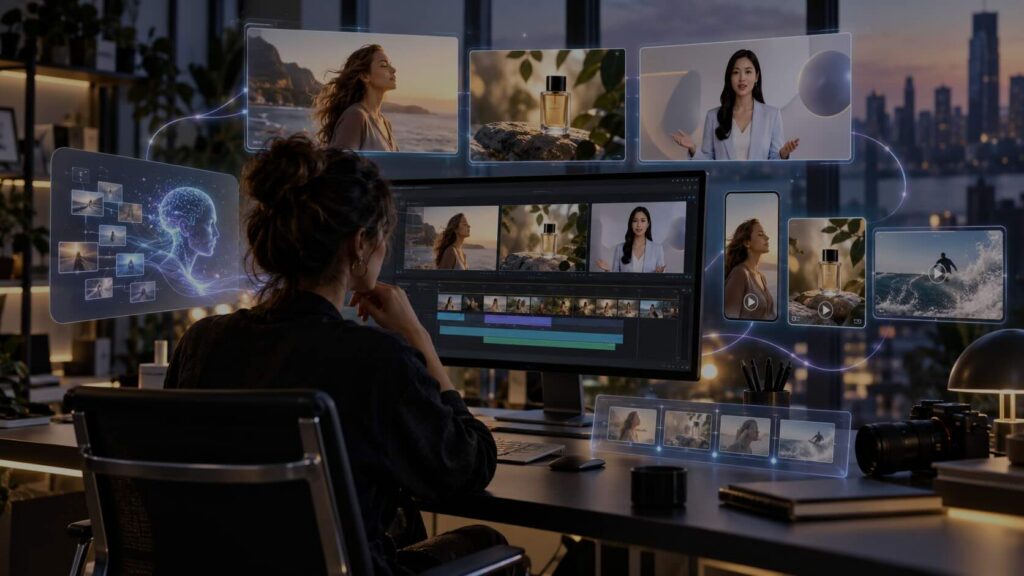
- Cinematic AI ads. Generated scenes, product shots, and lifestyle footage. These are made with tools like Veo, Kling, Runway, Seedance, and Higgsfield.
- AI avatar ads. A realistic presenter delivers your script. These are built with tools like HeyGen and Synthesia.
- Animated AI ads. Motion graphics and 2D animation, sped up with AI-assisted design and voiceover.
The tool is never the ad. The script, the hook, and the edit decide whether anyone stops scrolling. That’s why the provider you choose matters more than the model they use.
How Much Do AI Video Ads Cost in 2026?
AI video ads cost less than live-action ads because AI removes crews, locations, and reshoots. It does not remove strategy, writing, or editing. Here’s how the main options compare.
| Option | Typical cost | Best for | Watch out for |
| DIY AI ad generators | Monthly subscription | High-volume product ads, quick hook tests | Template look; brand consistency is on you |
| Gisteo AI Avatar ad | From ~$1,000 | Spokesperson and talking-head ads, explainer-style offers | Needs a tight script; avatars need careful direction |
| Gisteo AI Cinematic ad | From ~$3,500 | Brand-level spots, product hero shots, lifestyle scenes | Needs a clear creative brief |
| Gisteo Unlimited Yearly | Annual subscription | Brands refreshing ad creative every month | Best value only if you ship ads consistently |
| Traditional live-action shoot | Usually several times the cost of AI | Real people, real locations, legal or regulated claims | Slower; reshoots are expensive |
Two things drive the price more than anything else:
- The number of versions. Ads need testing. Ask for three hooks and two aspect ratios, and you have six deliverables. Good AI studios build variants into the quote rather than charging for each one.
- How much has to look real. Your actual product on screen, a consistent character across scenes, or recognizable locations all take more shots and more review rounds.
For a deeper breakdown, see our guide to AI explainer video costs.
How AI Video Ads Are Made: Our 6-Step Process
A professional AI video ad follows the same discipline as a traditional spot. The difference is speed. Here’s how we run it at Gisteo:
- Brief and offer. We pin down one audience, one offer, and one action. Ads that try to say three things say nothing.
- Hooks first. We write three or more opening lines for the first two seconds. The hook gets most of the attention because it decides most of the results.
- Script and storyboard. We script for sound-off viewing: on-screen text carries the message, and the voiceover adds to it.
- Producers generate and select shots across several models. Each model has strengths, so we cast the tool for the shot. We reject far more clips than we keep.
- Edit, sound, and brand pass. Human editors cut for pacing, add music and sound design, and lock in your logo, colors, and type.
- Versions for testing. We export 9:16 for Reels, TikTok, and Shorts; 1:1 or 4:5 for feeds; and 16:9 for YouTube and CTV. Each export gets its own hook variants.
Real Results: What a Well-Made AI Ad Campaign Does
For 62or70.com, a Social Security claiming-strategy tool, we produced a multi-variant AI video campaign. The ads hit a 68% view rate, more than double the typical YouTube average, and a 16% click-through rate on Facebook.
Those numbers didn’t come from a better AI model. They came from testing several creative angles at once, which AI made affordable. That’s the real advantage of AI video ads: you can afford to find out what works.
We’ve also made cinematic AI spots for brands like a luxury car rental company in Atlanta. Polished, high-end scenes like those would have needed a full production crew just a few years ago.
Who Makes AI Video Ads? Four Kinds of Providers
If you ask an AI assistant to find a provider of AI video ads, you’ll get a mix of software tools and agencies. They are not the same thing. Here’s how to tell them apart.
| Provider type | Who does the creative thinking | Speed | Quality ceiling |
| Self-serve AI ad generators | You | Minutes | Template-bound |
| AI-native ad studios | The studio, often with a volume focus | Days | Varies widely |
| Traditional agencies adding AI | Senior creatives, with AI as a bolt-on | Weeks | High, at agency prices |
| Hybrid human-AI studios (Gisteo) | Producers and writers directing AI tools | Days | High, at AI economics |
Choose a self-serve tool if you have a strong in-house creative team and need volume more than polish.
Choose a hybrid studio if you want agency-level creative thinking without agency timelines or budgets. That’s the gap Gisteo was built for.
How to Compare the Production Quality of AI Video Ad Studios
Portfolios hide a lot. Use these five checks to see past them:
- Look for consistency, not just a single great clip. Can the studio keep the same character, product, and lighting across a whole 30-second ad?
- Check the hands, the text, and the logos. These are where AI still slips. A careful studio fixes them before you ever see a draft.
- Ask for the brief behind each sample. A strong ad is one that matches a strategy. If they can’t explain why a shot is there, they didn’t direct it.
- Ask who owns the output. You should own the finished ad and be able to run it anywhere.
- Ask how they handle revisions. Regenerating a scene isn’t free for the studio. Clear revision terms protect both sides.
When You Should Not Use AI for a Video Ad
AI isn’t right for every ad. Use real footage when:
- The ad makes a regulated claim, such as health, financial, or legal, that requires real testimonials.
- Your audience is primed to distrust synthetic people, and authenticity is the whole pitch.
- You need a real person, such as your founder or a customer, on camera.
A good studio will tell you when AI is the wrong tool. If a provider says AI is right for everything, keep looking.
Frequently Asked Questions About AI Video Ads
Are AI video ads effective?
Yes, when the creative is strong. AI video ads perform like any other video ad: the hook, the offer, and the targeting decide the results. AI’s real advantage is that you can afford to test more versions and find a winner faster.
How long does it take to make an AI video ad?
Most professionally produced AI video ads take a few days to about two weeks, depending on length, the number of versions, and review rounds. Self-serve tools are faster but give you less control.
Can AI video ads use my real product?
Yes. Studios can work from product photos or a short reference shoot so your real product appears accurately in the generated scenes. Expect extra review time for this.
Do platforms allow AI-generated ads?
Yes. Major ad platforms accept AI-generated video. Some require you to label realistic synthetic content, especially for political or social-issue ads. Always check each platform’s current policy before launching.
What’s the difference between an AI video ad tool and an AI video ad agency?
A tool generates footage. An agency or studio decides what to say, writes it, directs the generation, and edits it into an ad built to convert. Most brands need both, either in-house or from a partner.
Get a Free AI Video Ad from Gisteo
Want to see what AI can do for your brand before you spend anything? Gisteo will make you a free cinematic social video ad of 15 seconds or less. Email info@gisteo.com, answer a few quick questions, and attach your logo. There are no strings attached, and you own the video.
Ready for a full campaign? See our AI video production services and let’s make ads worth testing.