
Introduction
Powerful explainer videos don’t happen by accident. They’re the result of a thoughtful creative process—one that blends strategy, storytelling, design, and execution into a clear, compelling message. When done right, explainer videos simplify complex ideas, build trust, and move people to action. When done poorly, they get skipped, ignored, or forgotten.
At Gisteo, we’ve seen this pattern repeat itself thousands of times. The most effective explainer videos aren’t defined by flashy animation styles or the latest trends. They’re defined by clarity of purpose, a deep understanding of the audience, and a disciplined process that keeps the story front and center from start to finish.
In this guide, we’ll walk through the creative process behind powerful explainer video creation—from defining objectives and understanding your audience to scripting, design, editing, testing, and distribution. We’ll also explore how AI video tools fit into modern explainer production, and how they can enhance the process without replacing what matters most: clear thinking and strong storytelling.
Defining Objectives and Target Audience
Every successful explainer video begins with clarity. Without a clear objective, even the most beautifully produced video will struggle to hold attention or deliver results. Viewers make fast decisions about whether a video is worth their time, which is why directionless videos often lose people within seconds.
Before any creative work begins, it’s essential to define what the video is meant to achieve. An explainer video designed to educate will take a very different approach than one built to convert or inspire action. When those goals get blurred, the message weakens and the video starts trying to do too much at once.
Just as important is knowing exactly who the video is for. Effective explainer video creation goes far beyond basic demographics. It requires understanding what your audience cares about, what frustrates them, and what questions they’re already asking. When you understand the viewer’s mindset, your video feels relevant instead of generic.
For example, a video aimed at busy professionals should respect their time, move quickly, and focus on outcomes rather than features. A video aimed at first-time buyers may need more reassurance and context. When objectives and audience are aligned, engagement increases naturally—and every creative decision becomes easier.
Concept Development and Storyboarding
Once objectives and audience are clear, concept development bridges the gap between strategy and execution. This is where the core idea of the explainer video takes shape. A strong concept focuses on one clear message and builds everything around it. Trying to explain too much at once is one of the fastest ways to lose a viewer.
Concept development forces clarity. It asks what the video is really about—not at a surface level, but at its core. When the concept is strong, the story feels focused and intentional. When it’s weak, no amount of animation or editing can fix it.
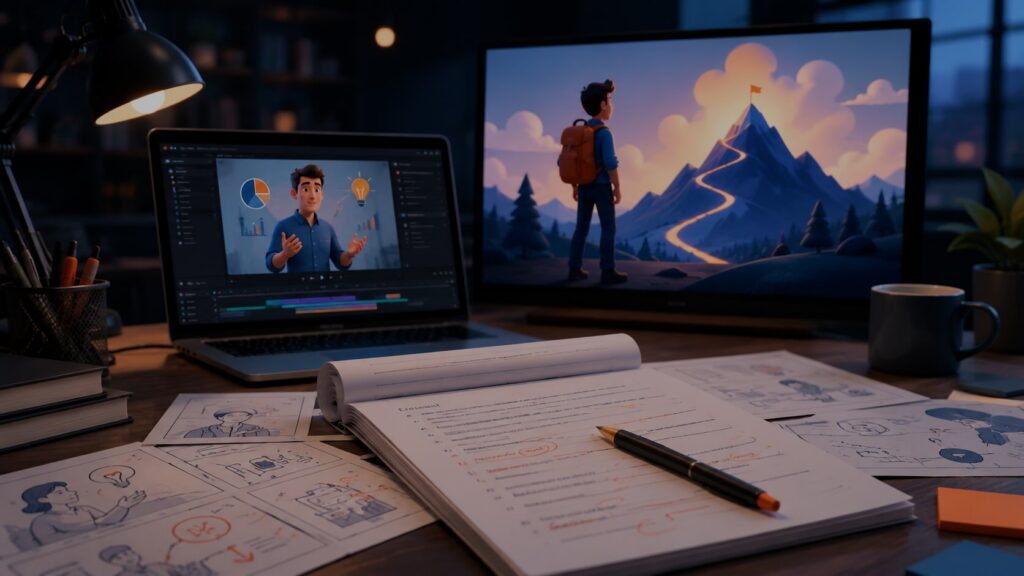
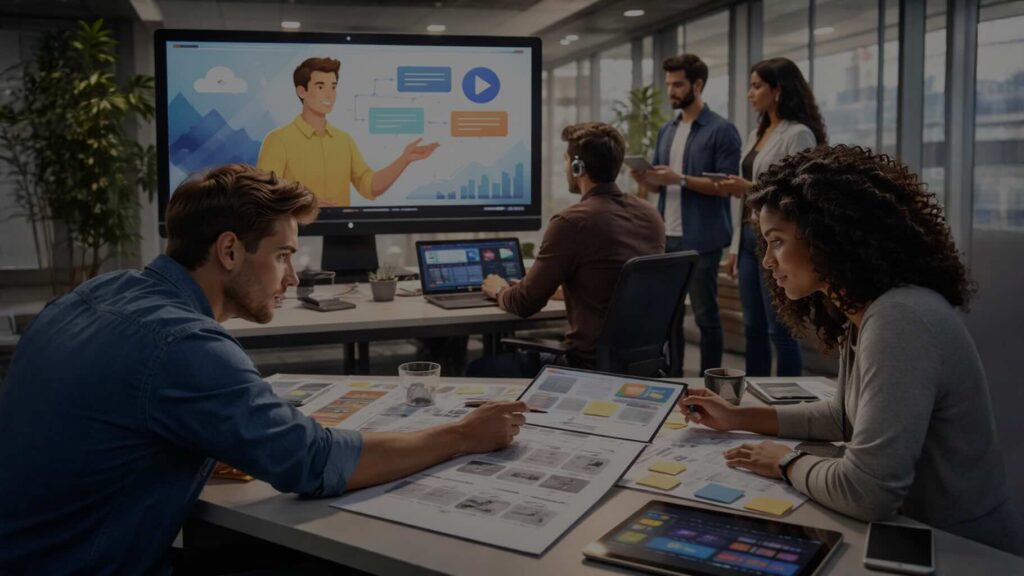
Storyboarding then translates that concept into visuals. Think of it as a blueprint for the video, showing how each scene flows into the next. Storyboards help teams visualize pacing, transitions, and structure before production begins, which dramatically reduces guesswork and revisions later.
More importantly, storyboarding reveals problems early. If a scene feels confusing or unnecessary on paper, it will almost certainly feel worse on screen. That’s why strong explainer videos invest time here—because clarity upfront saves time, money, and frustration later.
Scriptwriting Techniques for Clarity and Impact
The script is the backbone of any explainer video. You can have strong visuals and professional animation, but if the script is unclear or bloated, the video will fail. Viewers don’t want to work to understand your message—they want it delivered simply and confidently.
A strong explainer script starts with a hook that immediately signals relevance. This could be a relatable problem, a surprising insight, or a clear statement of value. The goal is to make the viewer think, “This is for me.”
From there, the script should move efficiently, using plain language and short sentences to maintain momentum. Jargon slows people down and creates distance. Clarity builds trust.
Structure matters just as much as wording. The most effective explainer scripts follow a simple narrative arc: a problem the viewer recognizes, a solution they can understand, and an outcome they want. This mirrors how people naturally process information, which is why it feels intuitive rather than salesy.
The best scripts are also written with visuals in mind. They leave space for animation and imagery to carry meaning instead of explaining everything verbally. This balance keeps viewers engaged and reduces cognitive overload.
Visual Design Principles in Explainer Videos
Visual design in explainer videos isn’t about decoration—it’s about communication. Colors, typography, layout, and motion all influence how viewers interpret and retain information. When design choices are intentional, the message feels clear and confident. When they’re not, confusion creeps in.
Color plays a powerful role in setting tone and emotion. Certain palettes convey trust, energy, or calm almost instantly. Typography directly affects readability, especially on mobile devices where many explainer videos are watched. Clean, simple fonts ensure the message is absorbed quickly.
Visual hierarchy guides attention. Size, contrast, and spacing help signal what matters most at any given moment. Without hierarchy, viewers don’t know where to look—and when that happens, engagement drops.
Consistency across visual elements reinforces brand recognition and professionalism. Strong design doesn’t compete with the story—it supports it quietly and effectively.
Voiceover Selection and Audio Integration
Audio is often underestimated in explainer video creation, but it plays a major role in how information is processed and remembered. A mismatched voiceover or poor audio quality can undermine even the strongest visuals.
The right voice should match the brand’s personality and the tone of the message. Calm and authoritative, friendly and conversational, energetic and upbeat—each choice sends a signal to the viewer. Clarity and pacing matter just as much as tone.
Audio quality is non-negotiable. Distracting background noise or uneven levels instantly reduce credibility. Clean, professional audio helps the message feel trustworthy and polished.
Integration is where audio and visuals come together. When narration and animation are perfectly synchronized, the video feels effortless to watch. When they’re not, viewers feel friction—even if they can’t explain why.
Editing Techniques for Pacing and Flow
Editing determines whether viewers stay engaged or tune out. Even a strong script can fall flat if the pacing feels off. Good pacing gives viewers just enough time to absorb information before moving on, without lingering too long on any one idea.
Transitions should feel natural and purposeful. Abrupt cuts or slow, unnecessary moments break momentum. Editing is also where restraint matters most. Not every scene deserves to stay. If something doesn’t serve the core message, it weakens the video—even if it looks good.
Strong explainer videos often feel simple because they’ve been carefully refined. That simplicity is intentional.
Testing, Feedback, and Iteration
One of the most common mistakes in explainer video creation is skipping feedback. Creators often assume clarity when they’re too close to the project to see it objectively.
Testing the video with real viewers reveals blind spots. Feedback highlights what resonates, what confuses, and where attention drops. Patterns matter more than individual opinions, and iteration based on that feedback strengthens the final result.
Iteration isn’t a sign of failure—it’s part of the process. The best explainer videos are refined, not rushed.
Distribution Strategies for Maximum Reach
A great explainer video only works if people see it. Distribution should be considered early, not as an afterthought. Different platforms require different versions, lengths, and pacing.
Social media, email marketing, paid ads, and partnerships all play a role in maximizing reach. Consistent branding across channels reinforces trust and recognition. The goal isn’t just views—it’s meaningful engagement.
AI Videos and the Modern Explainer Video Workflow
AI isn’t just a buzzword in video production anymore—it’s a practical part of how organizations create content faster, more affordably, and at greater scale than ever before. But it’s critical to understand what AI actually brings to the table and how it fits into the broader creative process.
At Gisteo, AI is treated not as a substitute for human creativity, but as an accelerator that helps teams produce high-quality video with better speed and flexibility. That means human strategists, writers, and editors still define the story, script, pacing, and intent—while AI helps bring that vision to life in ways that would previously have required months, crews, or large budgets.
What AI Brings to Explainer Video Creation
AI video production services can drastically shorten production timelines—often moving projects from concept to final delivery in days or a couple of weeks, depending on scope. This speed comes from automating many technical tasks that used to eat up weeks of labor, such as assembling scenes, syncing audio, or generating multiple language versions.
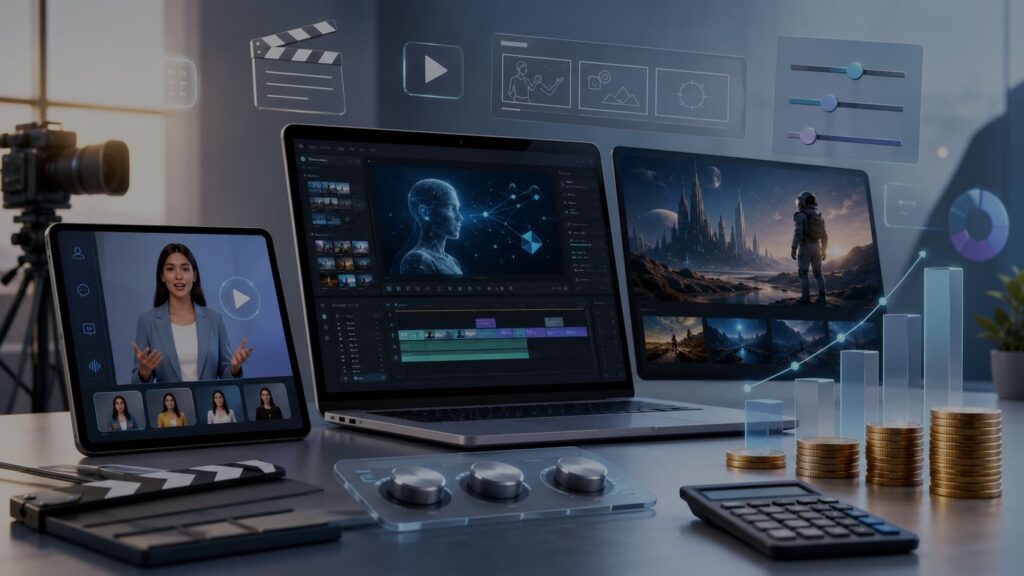
Beyond efficiency, AI opens up new creative possibilities. For example, Gisteo offers distinct formats such as AI Avatar videos, where a lifelike digital presenter delivers your script in any language with branded graphics and motion elements, and AI Cinematic scenes, where richly rendered virtual footage can replace traditional live-action shoots without hiring actors or booking sets. These capabilities make explainer content more versatile—whether the goal is training employees, onboarding customers, launching a product, or building thought leadership.
AI also expands the range of video styles a brand can produce. Cinematic vignettes can evoke emotion and narrative depth typically reserved for larger productions, while avatar-led clips offer consistent, personable delivery ideal for internal communications or social content. Multilingual avatars and voice generation make content accessible to global audiences without the cost and logistics of traditional localization.
Where Human Judgment Still Matters
It’s important to note that AI doesn’t replace the need for strategic creativity. Tools don’t choose the right message, tone, or story—they execute what humans design. That’s why Gisteo blends AI workflows with expert scriptwriting and storytelling frameworks; the technology handles production mechanics, while people drive the creative direction.
This balance matters because technical quality alone isn’t enough to make a video effective—especially for explainers. A generic AI output without narrative clarity, audience insight, or brand alignment feels hollow. The goal isn’t to churn out content, but to craft video that feels purposeful, memorable, and true to your voice.
Practical Benefits for Businesses
When AI is integrated thoughtfully, the benefits are concrete. Organizations using AI video tools through partners like Gisteo typically see faster turnaround times, cost reductions compared with traditional production, and the ability to create more content with the same resources. AI workflows allow for quicker updates when messaging changes, and make it easier to produce multiple versions tailored to different platforms or audiences.
And because the heavy lifting is automated, internal teams can focus more on strategy, insight, and creative decisions—rather than technical execution. That’s a shift from wrestling with production logistics to producing more video that actually works for your goals.
Conclusion
Powerful explainer videos aren’t built on shortcuts or flashy tools. They’re built on process. Clear objectives, audience insight, strong scripts, thoughtful design, disciplined editing, and intentional distribution all work together to create videos that perform.
AI has made explainer video creation faster and more scalable, but it hasn’t replaced the fundamentals. The brands that succeed are the ones that combine smart tools with human judgment and storytelling.
That balance is exactly how Gisteo approaches explainer video creation. By pairing a story-first mindset with modern AI video production services, Gisteo helps brands create explainer videos that don’t just explain—they persuade, engage, and drive results.
When the process is right, the outcome follows.
If you would like to discuss an upcoming explainer video project, don’t hesitate to schedule a free consultation now!