
Introduction
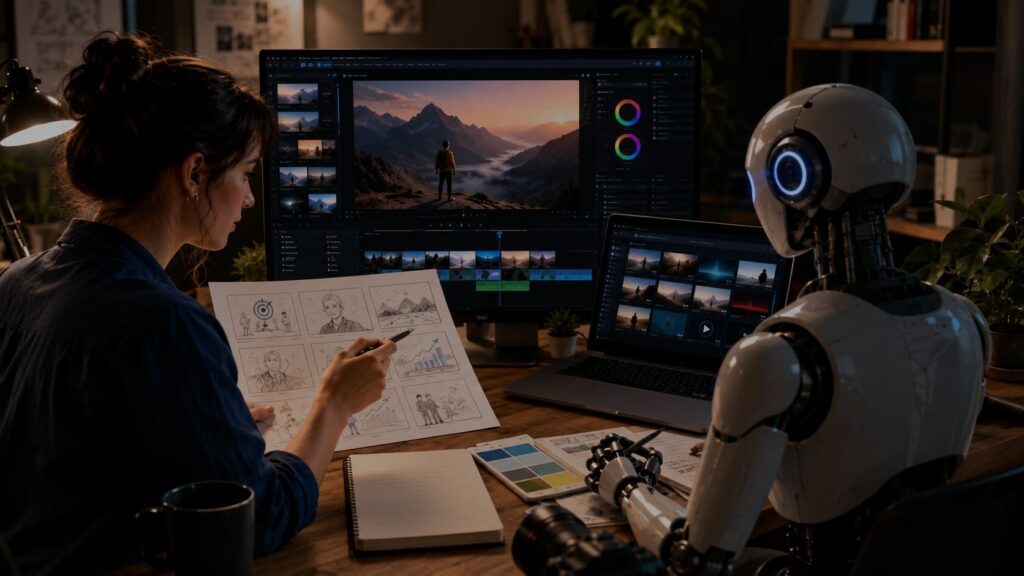
AI video tools are changing how businesses create content. What once took weeks can now happen in days — sometimes even hours. Scripts, visuals, voiceovers, edits, subtitles, and multiple versions can all be generated faster than ever before.
But there is a catch. Speed without strategy often leads to videos that feel generic, disconnected from the brand, or unclear in their messaging.
At Gisteo, we believe the real opportunity is not simply using AI to make more videos. It is building a smarter AI video workflow that combines the efficiency of AI with human storytelling, creative direction, and business thinking.
The best workflows do not replace people with AI. They use AI to remove friction, accelerate production, and streamline repetitive tasks while experienced writers, producers, designers, and editors shape the message and protect the quality.
In this guide, we will break down what an AI video workflow actually looks like, where AI fits best, where human oversight still matters, and how businesses can create scalable video content without sacrificing clarity, brand consistency, or effectiveness.
Quick answer: An AI video workflow helps businesses move from idea to finished video by combining AI tools with human strategy, brand review, and production quality control. The best workflow uses AI for speed, drafts, versions, and repetitive production tasks while keeping people in charge of messaging, creative direction, approvals, and final polish.
At Gisteo, we see AI as a useful production accelerator, not a replacement for clear thinking. Whether a business needs an AI-assisted video, a custom explainer, a product demo, or a scalable content campaign, the goal is the same: create video that is faster to produce without feeling generic, off-brand, or disconnected from the buyer.
What Is an AI Video Workflow?
An AI video workflow is a structured process for using artificial intelligence during video planning, scripting, production, editing, localization, and repurposing. It gives teams a clear path from the first idea to the final approved video.
For businesses, the workflow matters because AI can create a lot of content quickly. Without a process, that content can become inconsistent, inaccurate, or visually disconnected from the brand. With the right workflow, AI helps teams move faster while still protecting voice, message, style, and quality.
Why Businesses Need a Workflow Before Using AI Video Tools
Many companies start with the tool first. They test an AI avatar platform, a text-to-video generator, or an automated editing app and hope the result will feel polished. That can work for experiments, but it usually falls short for serious business communication.
A workflow keeps the video tied to a real business goal. It defines the audience, message, creative direction, review steps, and success metric before production begins. This is especially important for SaaS videos, sales videos, onboarding content, product explainers, and campaigns where the video needs to influence a buying decision.
The Ideal AI Video Workflow for Businesses
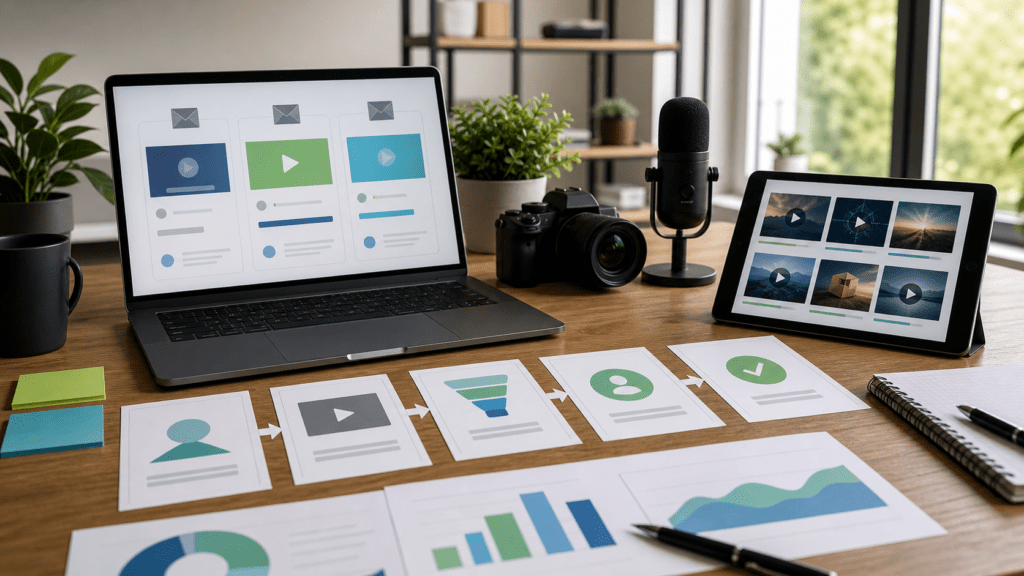
The strongest AI video workflow has seven stages: strategy, brief, script, visual direction, production, review, and distribution. Each stage gives AI a useful role while keeping human judgment in control.
1. Define the Business Goal
Start by deciding what the video needs to accomplish. A video for lead generation has a different structure than a video for onboarding, training, investor education, or sales enablement.
- Who is the audience?
- What problem are they trying to solve?
- What should they understand after watching?
- What action should they take next?
- Where will the video appear?
This step should happen before any AI prompt is written. A clear goal improves every later decision, from script length to visual style to call to action.
2. Build a Brand-Safe Creative Brief
A creative brief gives AI and human collaborators the same set of guardrails. It should include the brand voice, audience, offer, visual style, terminology, proof points, and anything the video should avoid.
For brand control, the brief should also include approved phrases, off-limit claims, preferred examples, competitor positioning, and visual references. This keeps the output from drifting into generic marketing language or overpromising.
3. Use AI for Message Exploration, Not Final Strategy
AI can be helpful for generating angles, outlines, audience objections, headline options, and rough script structures. But the final strategy should come from people who understand the product, market, and customer.
For example, AI might suggest five ways to explain a complex software feature. A strategist or producer should then choose the clearest angle, remove weak claims, and shape the story around the buyer’s real decision process.
4. Write a Script That Sounds Human
The script is where many AI video projects succeed or fail. AI can draft quickly, but business videos need clarity, pacing, specificity, and a natural voice. A strong script should sound like it was written for the viewer, not generated for a keyword.
Gisteo’s process for custom explainer videos puts heavy emphasis on scripting because the script controls the structure of the entire video. Visuals can support the message, but they cannot rescue a vague story.
5. Create Visual Direction Before Generating Assets
Before generating visuals, define the look. Is the video clean and corporate, energetic and social, product-led, cinematic, animated, avatar-based, or screen-recorded? Should it feel like a premium brand film, a practical product demo, or a short educational explainer?
This stage can include mood boards, sample frames, color direction, typography guidance, animation references, and examples from an existing video portfolio. Clear visual direction helps AI tools produce more consistent assets and helps editors avoid a mismatched final piece.
6. Produce the First Cut With Human Oversight
AI can support production by creating scratch voiceovers, draft visuals, subtitles, summaries, rough cuts, resized versions, or translated variations. But the first real cut should still be reviewed by a producer, editor, or creative lead.
Human oversight catches issues that AI often misses: awkward transitions, inconsistent visuals, strange voice pacing, weak claims, factual errors, missing context, or scenes that do not match the brand.
7. Review for Brand, Accuracy, and Conversion
The review stage should not only ask whether the video looks good. It should ask whether the video is accurate, on brand, useful to the viewer, and connected to a business outcome.
- Does the message match the approved positioning?
- Are the visuals consistent with the brand?
- Is every claim accurate?
- Is the call to action clear?
- Does the video answer the audience’s main question?
- Does it feel polished enough for the intended channel?
If the answer is no, revise before scaling. AI makes it easy to create more versions, but more versions only help when the core video is strong.
Where AI Fits Best in the Video Production Process
AI works best when it handles speed, variation, and repetitive tasks. Humans work best when they handle judgment, taste, strategy, emotion, and final approval.
| Workflow Stage | Good AI Uses | Human Role |
|---|---|---|
| Research | Audience questions, objections, competitor themes | Decide what matters and what is true |
| Briefing | Draft structure and prompt inputs | Set brand, audience, and business goals |
| Scripting | Outline options and rough drafts | Refine voice, clarity, and persuasion |
| Visuals | Concept frames, rough assets, style exploration | Choose direction and enforce consistency |
| Editing | Captions, rough cuts, resizing, cleanup | Control pacing and polish |
| Localization | Translations, subtitles, voiceover drafts | Review nuance and market fit |
| Distribution | Cutdowns and platform variations | Match versions to strategy |
How to Keep AI Videos On Brand
Brand control is the biggest concern for many businesses using AI video. The solution is not to avoid AI. The solution is to use it inside a controlled production system.
To keep AI videos on brand, create a simple brand control checklist before production begins. Include voice, visual style, color usage, logo rules, approved terminology, claims, product language, audience tone, and examples of what “good” looks like.
This is one reason many companies prefer working with an experienced video partner instead of relying only on self-serve tools. A partner can combine AI efficiency with the creative direction and quality control expected from professional commercial video production.
Common AI Video Workflow Mistakes
The most common mistake is using AI too early and strategy too late. Teams generate visuals before they define the message, or they create a script before they understand the audience.
- Starting with a tool instead of a brief
- Letting AI write the final message without review
- Using generic visuals that could belong to any brand
- Skipping legal, compliance, or product accuracy review
- Creating too many versions before fixing the core video
- Ignoring the final call to action
- Publishing AI-generated content that feels unfinished
A simple workflow prevents most of these problems. It gives the team a repeatable way to use AI without losing control of the finished product.
When to Use an AI Video Tool vs an AI Video Production Partner
An AI video tool can be useful for low-risk content, quick internal communication, simple social posts, or early creative experiments. A production partner is usually a better choice when the video needs to explain a complex offer, support a campaign, represent the brand publicly, or influence buyers.
If the project needs strategy, scripting, custom visuals, multiple stakeholders, professional editing, or a polished final result, a partner can help protect quality. Gisteo’s explainer video pricing page gives more context on what goes into a professionally managed video project.
A Practical AI Video Workflow Checklist
- Define the business goal
- Identify the target audience
- Write a brand-safe creative brief
- Choose the video format and channel
- Use AI to explore angles and outlines
- Human-edit the script
- Create visual direction before asset generation
- Produce a first cut
- Review for accuracy, brand fit, and conversion
- Create approved versions for each platform
- Measure performance and improve the next video
This checklist can be used for explainers, product videos, app demos, training content, sales enablement, or short-form campaigns. It is especially helpful when a business wants to scale video output without lowering brand standards.
How Gisteo Approaches AI-Assisted Video Production
Gisteo’s approach is built around the idea that AI should support the creative process, not flatten it. Businesses come to Gisteo because they need video that explains clearly, looks professional, and feels aligned with their brand.
That can mean a fully custom explainer, an AI-assisted production workflow, a SaaS product video, a pricing-focused sales asset, or a set of campaign variations. The exact workflow depends on the goal, but the principle stays the same: use technology where it helps, and use human creative direction where it matters most.
Businesses that want to explore the right approach can start with a free consultation or browse the Gisteo portfolio to see how different styles and formats can support different business goals.
Final Takeaway
An effective AI video workflow is not about automating creativity out of the process. It is about using AI strategically to speed up production while keeping the message, storytelling, and brand experience intact.
The businesses seeing the strongest results are not simply generating videos faster. They are building systems that combine AI efficiency with human judgment, creative oversight, and clear communication.
At Gisteo, we approach AI-assisted production as a hybrid model. AI helps accelerate research, scripting support, asset generation, editing tasks, localization, and content repurposing. But experienced humans still guide the strategy, narrative structure, visual direction, pacing, and final polish.
That balance matters because business videos are not just content assets. They are communication tools designed to explain ideas, build trust, support sales, educate customers, and move viewers toward action.
Whether you need an explainer video, SaaS demo, training video, AI avatar project, or a scalable video content system, the goal should never be simply “make more videos.” The goal is to create videos that actually work.
Businesses that want to explore a smarter, more strategic AI video workflow can browse our AI video production services page or schedule a free AI consultation to discuss the right approach for their goals.
FAQ
What is an AI video workflow?
An AI video workflow is a structured process for using AI tools during planning, scripting, production, editing, localization, and repurposing. It helps businesses create videos faster while keeping humans in charge of strategy and quality control.
How can businesses keep AI videos on brand?
Businesses can keep AI videos on brand by using a creative brief, approved messaging, visual guidelines, human review, and a clear approval process before anything is published.
Where should AI be used in video production?
AI is useful for research, outlines, rough drafts, captions, resizing, localization, visual exploration, and versioning. Human teams should still handle strategy, final scripting, creative direction, and approval.
Can AI create a full business video by itself?
AI can create simple videos with minimal human input, but important business videos usually need human direction to ensure the message is accurate, persuasive, polished, and aligned with the brand.
A company can use an AI video tool for simple, low-risk content. A production agency is usually better for public-facing videos, explainers, product demos, sales assets, or campaigns where quality and brand control matter.