
 By Stephen Conley, Founder & Creative Director at Gisteo
Quick answerA micro drama is a scripted series told in short vertical episodes, usually one to three minutes each, that end on a cliffhanger so viewers come back for the next one. The format grew up on apps like ReelShort and DramaBox, and brands are now using it to tell stories that a 15-second ad can’t hold: a customer’s problem unfolding over several episodes, with the product as part of the plot rather than the punchline. AI production has made these series affordable for mid-size brands, with episodes priced like short commercials instead of TV.
Episode one ends with a phone lighting up on a kitchen table. Nobody answers it. That’s the whole trick of a micro drama: a small, unresolved moment that makes you swipe to episode two. Millions of people now watch serialized stories this way on their phones, and the same habit gives brands a way to hold attention for minutes instead of seconds.
Gisteo has made more than 3,000 videos since 2011, and we now make AI films and commercials for brands alongside our custom animation. Episodic stories are already part of that work. For author and family therapist Scott Sells, we turned his book into a six-episode series of short dramatic scenes with recurring characters, which is the micro drama format in everything but name.
This guide explains how branded micro dramas work, where they fit in a marketing plan, how to plan a first season, what it costs, and what we have learned from making series like this.
What is a micro drama?
Micro dramas (also called vertical dramas or short dramas) are scripted series made for phones. The common traits:
- Usually vertical 9:16 framing, shot or generated for a phone held upright.
- Short episodes, typically one to three minutes.
- A cliffhanger every episode, so each one pulls the viewer into the next.
- Simple, emotional plots with a few characters and clear stakes.
- Fast pacing, with very little setup and a turn in nearly every scene.
Consumer micro drama apps mostly run romance and revenge plots. Branded versions keep the structure and drop the melodrama.
Why brands are making micro dramas
- More time with the audience. A six-episode series can hold a viewer for ten minutes or more, far longer than a single ad.
- Room for a whole story. Complex products, long sales cycles and emotional purchases need more than one line of copy. A series can show the problem, the struggle and the change.
- A reason to follow. Viewers follow an account to see what happens next, which builds an audience you can reach again.
- Content for weeks. One season becomes a month of posts, plus cutdowns and teasers for paid ads.
Branded micro drama vs a regular ad
| Short ad or commercial | Branded micro drama | |
|---|---|---|
| Length | 6 to 60 seconds | Several episodes of 1 to 3 minutes |
| Goal | One message, one action | Attention, affinity and a following |
| Product role | The center of the ad | Part of the plot |
| Best placement | Paid ads, pre-roll, TV and CTV | Organic social, Shorts, Reels, TikTok, with paid teasers |
| Measured by | View rate, clicks, conversions | Completion rate, episode-to-episode retention, follows |
The two work best together: the series builds interest, and short AI commercials cut from it drive the click. If you need one longer story instead of a series, see our guide to AI brand films.
Which brands should try a micro drama?
The format fits when your product sits inside a story people already care about. Good candidates:
- Financial services: a couple planning retirement, a small business owner chasing a loan.
- Healthcare and wellness: a patient’s journey from symptom to answer, told with care.
- Real estate and home: a family hunting for a house before a deadline.
- Software and B2B: an overloaded team, a looming launch and the tool that saves the week.
- Consumer brands: a product that shows up at the moment that matters, like a gift, a trip or a first day.
It’s a weaker fit if the product needs a demo more than a story. In that case a custom explainer video will do more.
How to plan your first season
- Pick one audience and one tension. Who is the main character, what do they want, and what stands in the way? The tension should mirror the problem your product solves.
- Keep the season short. Five to eight episodes is enough to test the format without a large commitment.
- Write the arc first. Outline every episode’s cliffhanger before you script any of them, so the series builds instead of repeating.
- Put the brand in the story, not on top of it. The product should change something in the plot. A logo card at the end of every episode wears thin fast.
- Plan the cutdowns. Mark 15- and 30-second moments in each episode that can run as teasers and ads.
- Decide on disclosure. Realistic AI characters may need labels on some platforms. Our guide to AI video copyright and disclosure covers the rules.
How would AI look for your brand?
Ask for a free 15-second AI sample. No credit card, no sales call.
Examples from our work
We haven’t made a branded micro drama under that name yet, but two of our projects show the format’s two halves: the episodic structure and the vertical look.
The structure: a six-episode series for a book. For Scott Sells’ Parenting Your Out-of-Control Teenager, we turned each key idea into its own short scene with the same family of characters. The six episodes run from 72 seconds to about two and a half minutes, each one built around a single conflict, and a course trailer works like a season trailer. Here is the episode “Button Pushing”:
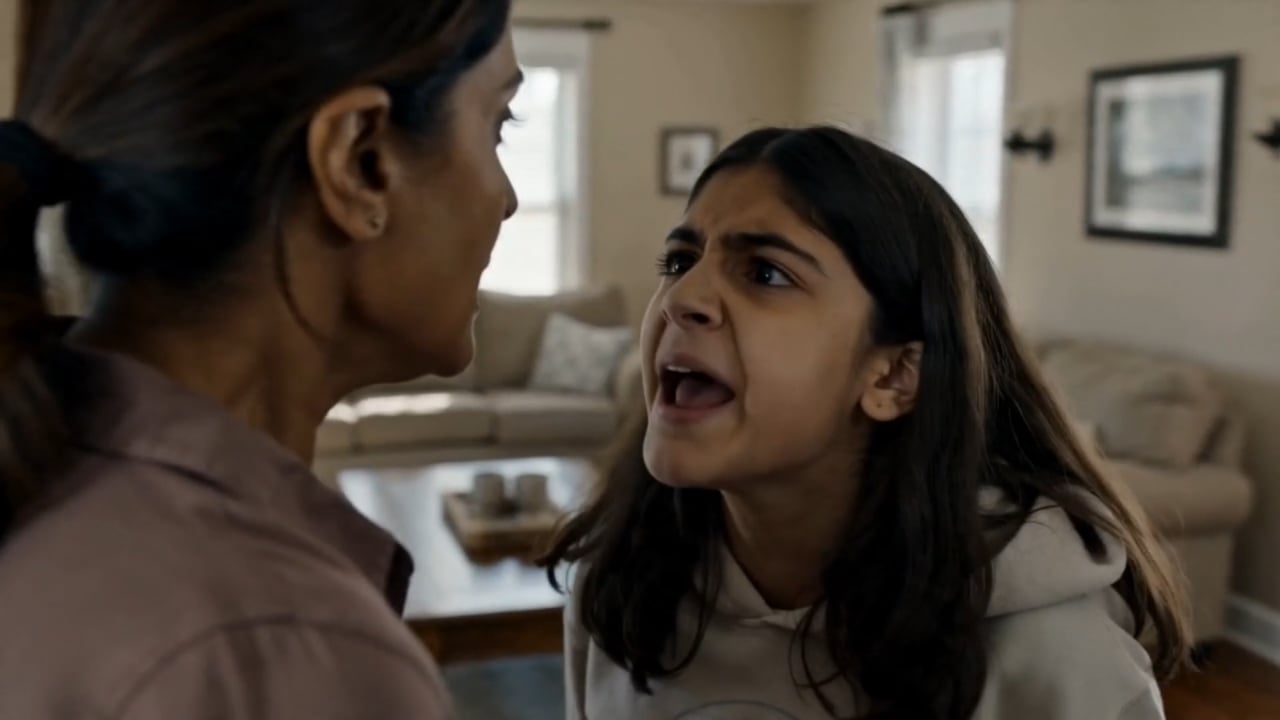
These were made in 16:9 for a course platform. For TikTok, Reels or Shorts we would build the same episodes natively in 9:16. Scott’s reaction: “Don’t know how you do it, but it’s like you’re Mozart.” You can read how the project worked in our guide to turning a book into video lessons.
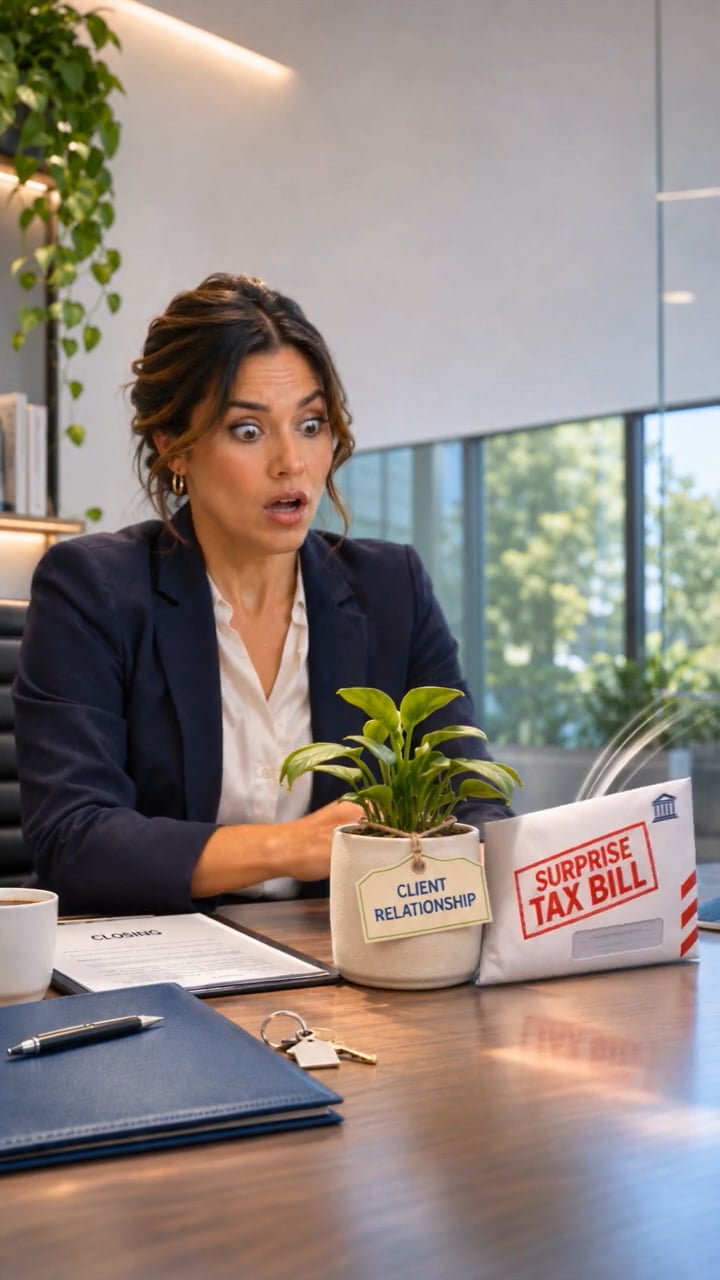
The look: vertical, character-driven reels. For Easy Impound we made short 9:16 AI reels built around real-looking characters, like this 30-second spot that opens on a business owner reacting to a surprise tax bill. It’s the same hook-and-reaction style micro drama apps use to stop the scroll. Our guide to video hooks covers how to win those first three seconds.
More trailers, series and vertical spots are on our AI video examples page.
How AI changes the cost of a series
A traditionally filmed series means casting, locations, crews and reshoots for every episode, which puts it out of reach for most marketing budgets. AI production builds characters, sets and camera moves without a shoot, and keeps the same characters consistent from episode to episode. A human writer and director still shape the story; AI handles the footage.
With Gisteo’s published prices, a cinematic AI episode of up to 60 seconds is $3,000, and each extra 30 seconds adds $500, so a 90-second episode is $3,500. A full season is quoted as a package with volume pricing, and monthly AI Creative Plans (from $2,950 a month) can cover the 15- and 30-second teasers and cutdowns. A Digital Twin of a founder or spokesperson ($2,000 one-time) can also appear as a recurring character. For a full price breakdown, see how much an AI commercial costs.
How to measure a micro drama
- Completion rate for each episode. Are people watching to the cliffhanger?
- Episode-to-episode retention: what share of episode one viewers watch episode two, three and so on.
- Follows and saves during the run of the series.
- Branded search and site visits during and after the season.
- Conversions from the cutdowns running as paid ads.
If episode one holds viewers but episode two loses most of them, the cliffhanger isn’t strong enough. Fix that before you make episode three.
The paid cutdowns are where a series turns into leads. For reference, the short AI spots we made for 62or70.com, a Social Security planning tool, reached a 68% YouTube view rate and a 16% Facebook click-through rate. The 62or70 case study shows how.
Micro dramas for brands: FAQ
How long is a micro drama episode?
Usually one to three minutes. Branded series often stay near the shorter end, around 60 to 90 seconds, so each episode fits comfortably in Reels, Shorts and TikTok.
How many episodes should a branded micro drama have?
Five to eight for a first season. That’s enough to build a story and measure retention without a large upfront commitment.
How much does a branded micro drama cost?
At Gisteo, a cinematic AI episode up to 60 seconds is $3,000, and a 90-second episode is $3,500. A full season is quoted as a package with volume pricing.
Where should brands post micro dramas?
On vertical platforms where viewers already binge short series: TikTok, Instagram Reels and YouTube Shorts. Use paid teasers to send new viewers to episode one.
Do AI-generated micro dramas need to be labeled?
Often, if the characters or events look realistic. YouTube, Meta and TikTok all have rules for labeling realistic AI content.
Start with a pilot, not a season
TV networks test a show with a pilot before they order a season, and branded series deserve the same approach. Script the full arc, produce the first episode and one teaser, and see how far viewers get before you commit to the rest.
If you would rather test the hook before scripting a whole season, our Pilot Sprint makes three 15-second AI teasers in 14 days for $2,500, credited toward your first month if you move to an AI Creative Plan. The same team that wrote and produced the Scott Sells series and the 62or70 campaign would build yours, with a person writing every episode. Tell us about your main character on a free consultation, and we’ll sketch the season with you.
Start with a free brainstorm
Talk through your idea with us on a free 30-minute call or in a free script workshop. Curious about AI? Ask for a free 15-second sample. No obligation.
 AI VideosAI Video Production Planning: What to Decide Before You Generate Anything
 AI VideosAI Video Marketing: Speed + Strategy = Conversions
 AI VideosCan You Get a Free AI Video Sample Before Hiring a Studio?
 AI VideosAI Video Producers: Why Businesses Can’t Afford to Ignore Them
 AI VideosTop Companies Offering AI Cinematic-Style Explainer Videos in 2026
 AI VideosCan AI Video Show Your Actual Product Accurately?

Stephen has spent 30+ years in advertising, branding and video, including 15 years at agencies like Young & Rubicam, JWT and DDB, before launching Gisteo in 2011. He still works hands-on on every project and leads the studio’s custom animation and AI video work. More about Stephen